
Where is Ajman?
Ajman is one of the seven emirates that make up the United Arab Emirates, located on the coast of the Arabian Gulf in the northern part of the country. Its main landmass is a compact coastal enclave almost entirely surrounded by the much larger Emirate of Sharjah to the north, east and south, with the Gulf coastline forming its western edge.
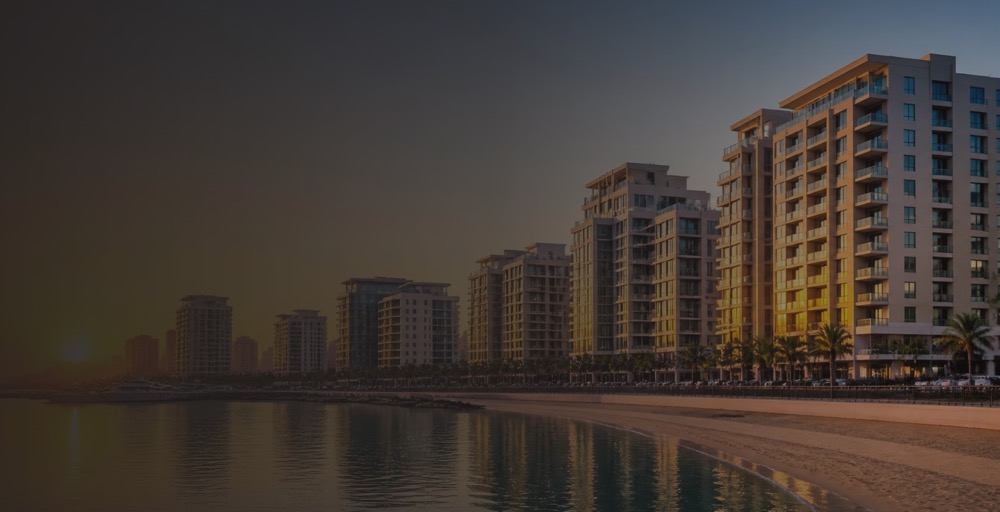
At roughly 259 square kilometres, Ajman is the smallest of the UAE's seven emirates by land area — yet with a 2024 population of approximately 583,000, it ranks as the fourth most populous, reflecting how densely its coastal city has developed relative to its size. The emirate is characterised by a mix of sandy beaches and waterfront promenades along the coast, giving way to the rugged Hajar Mountain range further inland toward its exclaves.
Ajman city itself sits centrally within the wider Dubai-Sharjah-Ajman metropolitan corridor, a short drive from both neighbouring emirates — a geographic position that has become increasingly relevant as residents and investors priced out of Dubai and Sharjah look toward Ajman for more affordable housing within easy commuting distance.
A brief history of Ajman
Ajman's modern history traces back to the Al Nuaimi tribe, who migrated to the area and established the settlement around 1775. Ajman gained recognition as an autonomous state in 1820, and the Al Nuaimi dynasty has ruled the emirate continuously since its founding, making it one of the longer-standing ruling families in the region.
Like the other Trucial States along the Gulf coast, Ajman entered into a series of maritime treaties with Britain during the 19th century before the withdrawal of British protection in the late 1960s prompted the seven emirates to negotiate a federation. Ajman formally joined the United Arab Emirates on 2 December 1971, alongside Abu Dhabi, Dubai, Sharjah, Umm Al Quwain and Fujairah (Ras Al Khaimah joined shortly after, in February 1972).
A visible link to that history survives at the centre of the modern city: the Ajman Museum, housed in an 18th-century fort that served as the ruler's residence and seat of government until 1970, before being converted into a museum a decade later. It remains one of the best-preserved historical forts in the UAE and sits within walking distance of the Corniche and the city's traditional gold and textile souqs.
Government and leadership
Ajman is a hereditary monarchy within the UAE's federal system, governed by the Al Nuaimi ruling family. The current ruler, His Highness Sheikh Humaid bin Rashid Al Nuaimi, has led the emirate since 1981, succeeding his father Sheikh Rashid bin Humaid Al Nuaimi. He is the ninth ruler of Ajman and had himself served as Crown Prince from 1960 until he acceded to the throne.
His Highness Sheikh Ammar bin Humaid Al Nuaimi has served as Crown Prince of Ajman since 1993 and has chaired the Ajman Executive Council since 2003, overseeing much of the emirate's day-to-day government administration, economic development and infrastructure planning. As with the other emirates, Ajman's ruler also sits on the UAE Supreme Council of Rulers, the country's highest federal authority.
Day-to-day administration runs through a network of government departments, including the Department of Digital Ajman (the emirate's official e-government portal), the Ajman Municipality and Planning Department, and the Ajman Department of Land and Real Estate Regulation, which governs property registration and freehold rules covered throughout this site's buying guide.
Ajman's economy today
Ajman's economy has historically centred on trade, fishing, dhow-building and light manufacturing, but real estate, industry and tourism have become its fastest-growing sectors heading into 2026. According to government-reported figures, Ajman's real estate transactions reached AED 28 billion in 2025, a 37% increase on 2024, and continued that momentum into 2026 — a trend covered in more detail in our Ajman Real Estate Market Report 2026.
Beyond real estate, Ajman has built a diversified industrial base, particularly in manufacturing, ceramics, and marine and boat-building — a sector with deep roots in the emirate's dhow-building heritage. Its port and industrial areas support a range of small and medium enterprises, while tourism has grown steadily around the Corniche, Ajman's expanded beachfront, and waterfront developments like Al Zorah.
Ajman's free zones
Free zones have played a central role in Ajman's economic growth, offering 100% foreign ownership, full repatriation of profits and streamlined licensing for international businesses. Ajman Free Zone, established in 1988, is the emirate's oldest and largest, now home to more than 9,000 companies from over 145 countries spanning trading, industrial, service and e-commerce activities.
More recently, Ajman has expanded its free zone offering with fully digital options aimed at faster-moving businesses. Ajman NuVentures Centre Free Zone, launched in October 2024, specialises in ultra-fast digital company setup and registered more than 6,500 companies within its first year alone — a signal of how much of Ajman's current economic growth is being driven by streamlined, business-friendly regulation rather than any single sector.
Things to see and do in Ajman
Ajman's compact size makes it easy to see most of its landmarks in a single visit, and its waterfront has been a particular focus of recent investment:
- Ajman Corniche — a lively waterfront promenade lined with cafes and restaurants, within easy walking distance of Ajman Beach, the Ajman Museum and Al Zorah.
- Marsa Ajman — one of the emirate's newest attractions, an expanded beachfront that grew from 55,000 to 220,000 square metres and now includes a 2.5 km cycling track alongside spaces for walking, jogging and public events.
- Ajman Museum — housed in an 18th-century fort at the city centre, offering exhibits on the emirate's archaeology, traditional life and political history, with signage in both Arabic and English.
- Al Zorah Nature Reserve — a one-million-square-metre protected mangrove and wetland area home to more than 60 bird species, including flamingos and herons, set within the wider Al Zorah masterplan that also includes golf, marina and residential development.
- Ajman's traditional souqs — gold and textile markets clustered near the museum and Corniche, offering a more traditional counterpoint to the emirate's newer retail developments.
Manama and Masfout: Ajman's inland exclaves
Beyond its coastal city, the Emirate of Ajman also administers two exclaves located well inland, separated from the main emirate by the territory of Sharjah and Ras Al Khaimah: Manama and Masfout.
Both exclaves sit within the UAE's mountainous interior near the Hajar Mountains and have historically been agricultural areas, known for date farming and, in Masfout's case, a cooler climate and more rugged mountain terrain than anywhere on Ajman's coast. Neither exclave is a significant population or commercial centre compared with Ajman city, but both remain politically and administratively part of the emirate, illustrating how the UAE's internal borders reflect historical tribal allegiances rather than simple geographic contiguity.
Why people are moving to and investing in Ajman
Ajman's combination of coastal location, expanding infrastructure and comparatively low cost of living has made it an increasingly popular choice for residents working in Dubai and Sharjah but priced out of housing there, as well as for property investors chasing yield. The emirate's freehold zones — including Al Zorah, Ajman Uptown, Ajman Downtown/Corniche and Al Rashidiya — now offer full foreign ownership, a relatively recent policy shift that has helped drive the real estate growth described above.
For a full breakdown of what it actually costs to buy, rent or invest in Ajman property, along with how it compares with Dubai and Sharjah, see our related guides: Buying Property in Ajman, 10 Reasons to Invest in Ajman Real Estate, and Ajman vs Dubai vs Sharjah.
Looking for a property in Ajman? Tell us what you need below and we'll share matching options.